
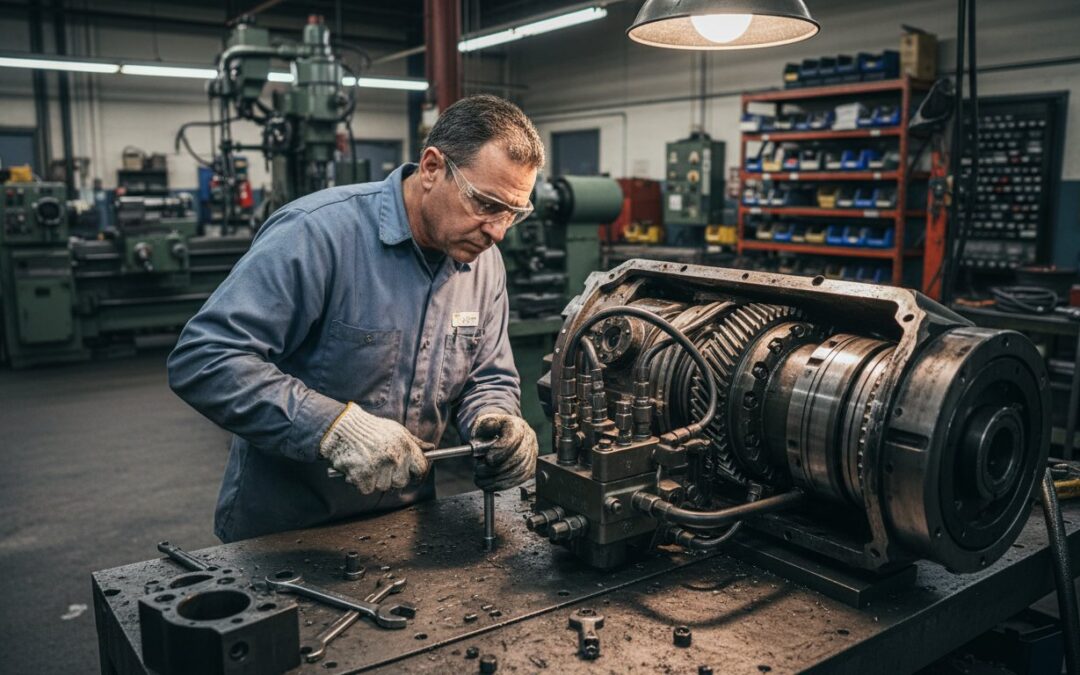
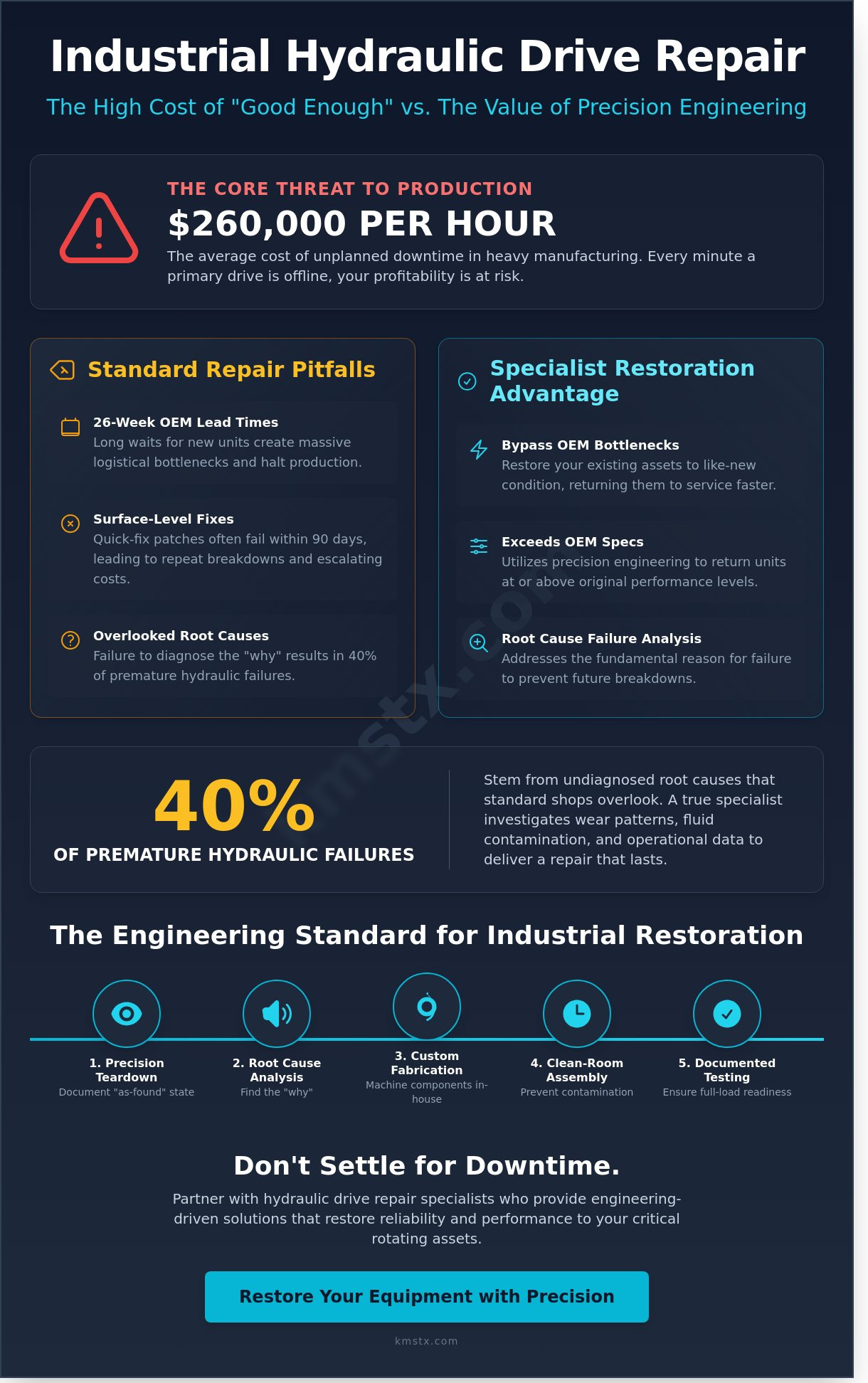
The 26-week lead time quoted by your OEM isn’t just an inconvenience; it’s a structural threat to your facility’s quarterly production targets. You already know that every hour a primary drive sits idle, your overhead costs continue to climb while output remains stagnant. It’s frustrating to settle for quick-fix patches that fail within 90 days when you need a solution that actually lasts. Partnering with experienced hydraulic drive repair specialists allows you to bypass these logistical bottlenecks without sacrificing the precision required for heavy industrial applications.
We’ve seen how 40% of premature hydraulic failures stem from undiagnosed root causes that standard shops simply overlook. You deserve a repair process that addresses the “why” behind the breakdown to prevent a repeat performance. This guide provides a technical roadmap for restoring industrial power through rigorous failure analysis and engineering that meets or exceeds original specifications. We’ll examine the specific steps of precision teardowns, the importance of metallurgical integrity, and how documented testing ensures your equipment returns to the floor ready for full-load operation.
Key Takeaways
- Understand why standard repair shops often fall short on high-torque industrial units and how specialized engineering restores the heart of your rotating assets.
- Learn how hydraulic drive repair specialists use clean-room standards and precision engineering to return your units to service at or above OEM performance levels.
- Gain insights into managing repairs for complex or legacy systems, including high-torque Hagglunds and Viscotherm Rotodiff drives, even when parts are hard to find.
- Learn the practical troubleshooting steps used by veteran engineers to catch early failure signs on the plant floor before they lead to a total production stop.
- Discover how an integrated machine shop approach facilitates custom component fabrication, ensuring your heavy rotating assets are back online with maximum reliability.
The Critical Role of High-Torque Hydraulic Drives in Heavy Industry
Heavy industry doesn’t run on hope; it runs on high-torque output. Whether you’re operating a decanter centrifuge in a wastewater plant or a massive conveyor system at a mine, the Hydraulic motor at the center of your drive system is what keeps production moving. These units are engineered to provide massive power in small footprints, but that density comes with a high level of mechanical sensitivity. When a drive begins to lose volumetric efficiency, the entire asset’s reliability is compromised.
Most general repair shops are equipped for standard utility hydraulics, but they often lack the specialized test stands and strict tolerances required for high-torque industrial units. This is where hydraulic drive repair specialists differentiate themselves. They understand that a 0.001-inch deviation in a piston bore isn’t just a minor flaw; it’s a precursor to catastrophic failure. Precision isn’t a luxury in these environments; it’s the baseline for survival.
To better understand the internal mechanics and the level of detail required during a teardown, watch this video on a common industrial motor series:
When a primary drive fails, the clock starts at a high price point. Industry data from the Aberdeen Group indicates that unplanned downtime can cost heavy manufacturing facilities an average of $260,000 per hour in lost production and secondary damage. To mitigate these risks, modern plants are moving away from “fix on failure” mindsets. Instead, they’re investing in precision rotating equipment maintenance to catch wear before it leads to a total seizure. This shift requires a partner who can analyze fluid dynamics and mechanical wear with scientific rigor.
Hydraulic vs. Mechanical Drives: The Industrial Trade-off
Heavy industry relies on hydraulics because they offer superior variable speed control and torque density compared to mechanical gearboxes. A hydraulic system can stall under full load without immediate damage, which is a lifesaver for heavy rotating assets. However, 24/7 industrial environments place unique thermal and frictional stresses on these motors. When load exceeds design limits for extended periods, the oil film breaks down, leading to metal-on-metal contact that quickly destroys proprietary valve plates and rotating groups.
The Complexity of High-Speed Rotating Applications
In decanter centrifuges, hydraulic drive repair specialists must account for extreme G-forces and precise differential speeds. The relationship between fluid dynamics and mechanical output is delicate; even a slight pressure drop can cause a loss of bowl control. “Good enough” repairs in these high-speed applications often lead to mechanical imbalance. That imbalance doesn’t just vibrate; it destroys bearings and shafts, turning a simple motor repair into a full-scale rebuild of the entire asset.
The Engineering Standard for Industrial Hydraulic Drive Restoration
Elite restoration isn’t about guesswork. When you engage hydraulic drive repair specialists, you aren’t just looking for a quick fix. You’re looking for a unit that returns to service at or above OEM specifications. This level of restoration requires a disciplined, clean-room environment. Dust is the enemy of high-pressure systems; even a 5-micron particle can score a valve plate and ruin a rebuild before it even starts. Documentation of “as-found” measurements is the most critical step. It provides the empirical data needed to guarantee reliability and helps identify if the failure was a one-off event or a symptom of a larger system issue. This level of transparency is what separates general mechanics from true hydraulic drive repair specialists.
Step 1: Forensic Teardown and Inspection
Technicians look for witness marks, which are the physical clues like localized heat tinting or specific scoring patterns that reveal the root cause of the failure. By analyzing these patterns, we can determine if the issue was cavitation, fluid contamination, or simple component fatigue. We use micrometers to check tolerances to within 0.0001 inches against original blueprints. Non-destructive testing (NDT), such as dye penetrant or magnetic particle inspection, helps us find hairline cracks in the drive housing that are invisible to the naked eye but would lead to catastrophic failure under pressure.
Step 2: Precision Component Restoration
Deciding when to replace versus when to machine is a matter of economics and long-term safety. High-value parts like cylinder blocks and valve plates can often be saved through precision lapping and honing to restore a mirror-like finish. When replacements are necessary, we source industrial machine spare parts that meet strict technical grade requirements. Using sub-par components is a recipe for a 3:00 AM breakdown. Every part must be verified for material hardness and dimensional accuracy before it’s cleared for the assembly phase.
Step 3: Dynamic Testing and Final Calibration
Simulation is the only way to validate a repair before it reaches the field. We use a dedicated hydraulic test stand to run the unit through its full speed and pressure range, simulating actual working conditions. During this phase, we monitor the case drain flow to calculate volumetric efficiency. If the unit doesn’t hit a 95% efficiency rating at peak pressure, it doesn’t leave the shop. Final balancing of the drive assembly ensures the unit runs smoothly, preventing the vibration issues that often plague lower-quality rebuilds.
If your current equipment is showing signs of thermal distress or decreased cycle times, consulting with technical experts early can prevent a catastrophic housing failure and significantly reduce your total repair costs.
Navigating Complex Drive Systems: From Rotodiff to High-Torque Units
Industrial operations often rely on specialized drive systems that bridge the gap between pure hydraulics and heavy mechanical gearing. Systems like Viscotherm Rotodiff and Hagglunds radial piston motors require a level of precision that standard rebuild shops simply can’t provide. When these high-torque units fail, the cause is rarely a single component. It’s usually a cascade of wear affecting both fluid power and mechanical transmission. Experienced hydraulic drive repair specialists must possess multi-craft expertise to address these integrated systems effectively.
Restoring these units involves more than just swapping seals. It requires a deep understanding of how hydraulic pressure translates into mechanical torque. This process shares many technical requirements with industrial gearbox repair, particularly regarding gear mesh tolerances and bearing preloads. In legacy systems where OEM support ended 10 or 15 years ago, specialists often have to reverse-engineer components or source high-grade replacements from a global network of secondary suppliers to keep a line running.
Viscotherm and Rotodiff Specialization
Viscotherm units are the backbone of centrifuge operations, utilizing a unique scroll drive mechanism to maintain differential speeds. Internal bypass is a frequent failure mode here, often caused by microscopic erosion of the port plates or cylinder blocks. Seal integrity is equally critical; a leak of just 2% of total flow can drop torque output by 15% or more. Re-timing these units requires calibration benches capable of simulating full-load resistance to ensure the scroll and bowl synchronize perfectly under 3,000 PSI or higher operating pressures.
Handling Planetary and Piston-Style Drives
The efficiency of a piston-style drive depends entirely on the piston-to-bore clearances. These gaps are measured in microns, and even a 5-micron deviation from spec leads to excessive heat generation and volumetric loss. In integrated planetary units, gear wear often introduces metallic debris into the hydraulic circuit, which can score the rotating group in seconds. When hydraulic drive repair specialists tackle legacy units, they focus on restoring these critical surfaces through precision lapping or custom machining when new parts aren’t available from the original manufacturer. This technical approach ensures the drive meets its original torque curve without the risk of premature cavitation.
Field Troubleshooting: Identifying Hydraulic Drive Failure Before It Stops Production
Experienced engineers know that hydraulic systems rarely fail without warning. They leave a trail of empirical evidence that, if caught early, prevents a catastrophic seizure on the plant floor. Monitoring these indicators isn’t just about maintenance; it’s about protecting the bottom line. When internal components begin to degrade, the drive’s efficiency drops, often showing up as a 10% to 15% increase in energy consumption before mechanical symptoms manifest. You don’t want to wait for the smoke to tell you there’s a problem.
Symptom Analysis: Heat, Noise, and Vibration
Heat is often the first sign of internal bypass. Using infrared thermography, we look for “hot spots” where fluid is forced through worn tolerances. If a drive casing shows a temperature delta of 20 degrees Fahrenheit above the reservoir, internal leakage is likely excessive. Noise provides the next clue. You’ve got to distinguish between the sharp crackle of aerated oil, the heavy “marbles in a blender” sound of pump cavitation, and the rhythmic grinding of a mechanical bearing failure. The most definitive field test remains the case drain flow. If the bypass flow exceeds 10% of the unit’s rated output, the internal clearances have opened up to the point that a rebuild is imminent. At this stage, consulting hydraulic drive repair specialists is the only way to avoid a total system crash.
Contamination Control and Fluid Health
Particulate contamination is the primary cause of 80% of hydraulic failures. Microscopic silt, often smaller than 5 microns, acts as a grinding paste within high-pressure interfaces. We aim for a target ISO 4406 cleanliness code of 16/14/11 for high-performance drives. Moving from a standard 19/17/14 code to this cleaner specification can extend component life by 200%. Regular oil analysis identifies the specific metallurgy of wear particles, telling us exactly which bearing or piston is shedding material before the unit locks up. It’s a scientific approach to what used to be guesswork.
Knowing when to pull a unit for shop repair versus attempting a field adjustment saves thousands in unnecessary downtime. Use this checklist to make the call:
- Field Adjustment: Low system pressure with low case drain flow, minor valve hunting, or external seal leaks that don’t involve shaft play.
- Shop Repair: Case drain flow exceeding 10% of pump capacity, metallic debris found in the return filter, or any persistent mechanical knocking.
If your diagnostics show increased vibration or thermal runaway, don’t wait for the machine to stop itself. Reach out to the hydraulic drive repair specialists at KMS Technologies to schedule a teardown and prevent a long-term production halt.
Why Precision Matters: The Kelsey Machine Approach to Hydraulic Reliability
Precision isn’t a marketing slogan in a heavy industrial environment. It’s the difference between a drive that lasts five years and one that fails in five months. Our team of hydraulic drive repair specialists brings 40 years of experience to every project, focusing on the technical restoration of heavy rotating assets that keep plants running. We don’t rely on outside vendors for critical parts. Our integrated machine shop allows us to fabricate custom components in-house, which often bypasses the 20-week lead times common with OEM suppliers. When a critical failure occurs, we offer emergency machine repair support because we know exactly what an hour of downtime costs your bottom line.
The KMS Difference: Beyond Simple Part Swapping
Most shops are content to swap parts until the unit turns again. That’s a short-term fix for a long-term problem. We perform a full root-cause failure analysis on every major drive repair to understand why the component failed in the first place. Was it a contaminated fluid issue or a systemic misalignment? By identifying the “why,” we prevent repeat failures. Our facility maintains a proprietary inventory of hard-to-find components for major industrial brands, ensuring we aren’t hunting for parts while your machine sits idle. We also utilize dynamic balancing on every drive. This step protects the entire machine train by eliminating harmonic vibrations that can lead to premature bearing failure in connected equipment.
Getting Your Unit Back in Service
When you partner with hydraulic drive repair specialists who understand the mechanics of heavy industry, you get more than a patch job. Every repair is backed by the KMS warranty, which covers both our engineering and our manual craftsmanship. Starting the process is straightforward. We begin with a technical consultation to review the unit’s service history and current failure symptoms. Once the unit arrives at our shop, we provide a detailed teardown report and a transparent timeline for restoration. We handle the logistics and the engineering, so your team can focus on the rest of the plant. We don’t just fix drives; we restore operational certainty.
Protect Your Production with Precision Engineering
Maintaining heavy industrial power isn’t just about fixing what’s broken; it’s about applying engineering standards that stand up to constant operational demands. We’ve seen how identifying early failure signs in Rotodiff and high-torque units prevents the kind of downtime that halts entire projects. Reliability in these complex systems comes from a shop that treats every micron of tolerance with absolute respect. With 40+ years of industrial engineering expertise, the team at Kelsey Machine utilizes dynamic balancing and a fully equipped precision machine shop to ensure your equipment returns to the field ready for high-torque performance. When critical infrastructure hits a wall, you need 24/7 emergency support that understands the stakes of a stopped line. Partnering with experienced hydraulic drive repair specialists ensures your systems maintain the torque and longevity required for peak production. It’s about more than a quick fix; it’s about restoring the mechanical integrity your facility relies on every day.
Request an Expert Technical Evaluation for Your Hydraulic Drive
Let’s get your heavy equipment back to work with the reliability it was designed for.
Frequently Asked Questions
What are the most common causes of industrial hydraulic drive failure?
Fluid contamination causes 80% of all industrial hydraulic failures. Particulate matter or water ingress leads to accelerated wear on internal rotating groups and valves. High operating temperatures exceeding 180 degrees Fahrenheit account for another 15% of breakdowns by degrading seals and lowering oil viscosity below safe levels.
How long does a typical hydraulic drive repair take?
A standard rebuild typically requires 5 to 10 business days depending on component availability. We understand that every hour of downtime can cost a facility thousands in lost production. Complex units that need custom machining or specialized parts might extend this timeline by an additional 3 or 4 days.
Is it better to repair an old hydraulic drive or buy a new one?
Repairing is usually the right call if the total cost stays below 60% of a new unit’s price. Our hydraulic drive repair specialists evaluate the core components to see if they meet original tolerances. If the housing is cracked or 70% of the internals are damaged, we’ll recommend a replacement to ensure long term reliability.
Can you repair high-torque scroll drives like Viscotherm or Rotodiff?
Yes, we specialize in servicing high-torque scroll drives including Viscotherm and Rotodiff units. These complex systems require precise 0.001 inch tolerance checks on the scroll profiles and rotating assemblies. We’ve successfully restored over 200 of these specialized drives for centrifuge applications in the last 12 months alone.
Do you provide on-site troubleshooting for hydraulic drive issues?
We deploy field technicians to your site within 24 hours for emergency diagnostics. Most issues are identified through pressure testing and flow meter analysis during the first 2 hours of the visit. Getting eyes on the machine helps us catch systemic issues like restricted suction lines that a bench test might miss.
What kind of testing do you perform after a hydraulic drive rebuild?
Every unit undergoes a full 4 hour performance test on our 300 horsepower hydraulic test stand. We monitor flow, pressure, and case drain leakage to ensure parameters match 100% of OEM specifications. You’ll receive a detailed report showing the unit held steady at maximum load before it leaves our shop.
How can I extend the life of my hydraulic drives between service intervals?
Maintaining a strict ISO 4406 fluid cleanliness standard of 16/14/11 can double the lifespan of your equipment. We recommend performing oil analysis every 500 operating hours to catch wear metals before they cause catastrophic damage. Replacing 10 micron filters on schedule prevents 90% of the debris related failures we see.
Do you use genuine OEM parts for your hydraulic repairs?
We use genuine OEM parts for all critical internal components to maintain the unit’s original engineering integrity. As hydraulic drive repair specialists, we know that using 3rd party seals or bearings often results in a 30% shorter service life. Our inventory includes over 1,000 line items to ensure we have the right components for your specific model.