
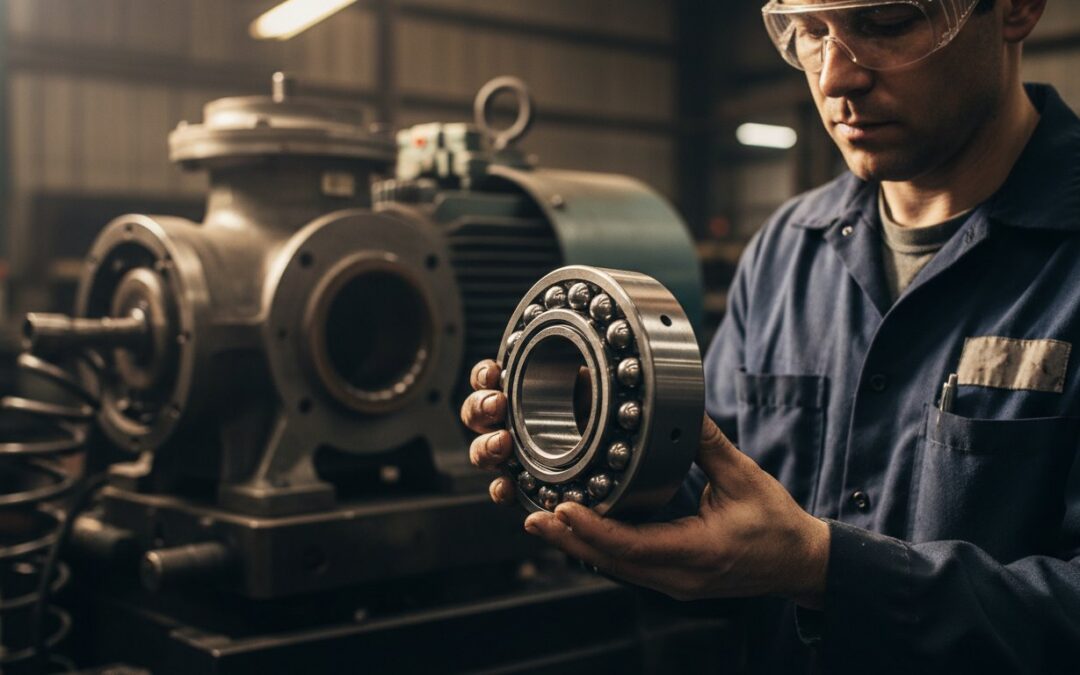
Last Tuesday, a plant manager in the Greater Houston Area watched $12,800 evaporate every hour because a single $215 seal failed on a high-speed centrifugal pump. It’s a scenario that plays out in 72% of heavy industrial plants every year, where the smallest components dictate the health of the entire production line. We all know that unplanned downtime doesn’t just hurt the quarterly budget; it creates a massive headache when you’re trying to source high-quality industrial bearings and seals for machinery that’s been in service since 1994. It’s often difficult to tell if a generic aftermarket part will actually hold up like the original equipment under heavy loads.
In this guide, you’ll get a field-expert’s perspective on how to navigate the technical gap between OEM specifications and real-world performance to keep your rotating equipment online. We’ll show you how to identify the specific vibration and heat signatures that typically precede a 45% drop in Mean Time Between Failures. You’ll gain a clear roadmap for selecting, maintaining, and replacing critical components through Kelsey Machine Services, a reliable restoration partner that understands the day-to-day realities of the shop floor.
Key Takeaways
- Learn how critical industrial bearings and seals function as the primary wear components in your rotating equipment, managing friction and containing lubricants to prevent costly downtime.
- Understand the practical differences between spherical and tapered roller bearings to ensure your machinery is properly equipped for specific load and alignment challenges.
- Get a clear look at why precision tolerances and ABEC ratings matter, helping you distinguish between high-performance OEM parts and low-grade alternatives that compromise longevity.
- Master the three warning signs of component failure-Heat, Noise, and Vibration-and learn how thermography can pinpoint friction before a total seizure occurs.
- Discover the KMS approach to technical restoration, moving beyond simple part swapping toward a comprehensive teardown and engineering-led inspection process.
The Critical Role of Industrial Bearings and Seals in Rotating Equipment
You’ve likely seen a $100,000 pump sitting idle because of a part that fits in the palm of your hand. It’s a common sight in plants where maintenance budgets are squeezed too tight. High-speed centrifuges, multistage pumps, and industrial gearboxes all rely on a few critical components to keep the process running. Industrial bearings and seals are the primary wear points in these machines. Their job is straightforward but difficult. They must manage intense friction while keeping expensive lubricants inside the housing and keeping abrasive contaminants out of the internal workings.
According to 2023 industry benchmarks from the Society of Tribologists and Lubrication Engineers, these components are responsible for 51% of all rotating equipment failures. It’s rarely the heavy steel casing or the primary drive shaft that gives up first. Instead, the failure happens at the interface where motion occurs. The financial risk of using sub-par parts is lopsided. A maintenance manager might save $300 by sourcing a generic bearing, but that $500 part can easily cause $50,000 in lost revenue when the line goes down for 14 hours. In 65% of facilities, the cost of the part is irrelevant compared to the cost of the unplanned downtime it prevents.
Common reasons these components fail include:
- Inadequate Lubrication: 36% of bearing failures result from improper lubrication levels or incorrect grease types.
- Contamination: Dirt and moisture ingress cause 25% of premature wear.
- Improper Installation: 16% of failures are linked to poor handling or incorrect mounting tools.
- Operational Stress: Overloading or misalignment accounts for the remaining 23%.
Why Seals are the First Line of Defense
Contamination from dust, process water, or chemicals is the leading cause of bearing fatigue, accounting for 48% of premature failures in harsh environments. When a seal is compromised, it doesn’t just let grit in; it creates a path for lubricant to escape. This leads to lubricant starvation, where the oil film thickness drops below the required 1-micron level. Without that film, heat builds up in seconds. Shaft finish is another critical factor. For shafts spinning at 3,600 RPM, a surface finish between 10 and 20 micro-inches Ra is necessary to prevent the seal from wearing out prematurely. If the shaft is too rough, it shreds the seal lip. If it’s too smooth, the seal can’t maintain the necessary fluid film to stay cool.
Bearings: The Foundation of Precision
Bearings do the heavy lifting by supporting radial and axial loads that can exceed 5,000 pounds in heavy industrial applications. This Mechanical Bearings Overview provides the technical background on how these components distribute those forces to ensure smooth rotation. During a technical overhaul, you must maintain OEM clearances with extreme precision. If a technician ignores a 0.002-inch deviation from the factory spec, the dynamic balance of the entire machine is at risk. High vibration levels will eventually shake the machine apart, starting with the industrial bearings and seals and moving to the shaft and motor mounts. Keeping these parts within spec ensures the machine operates within its designed tolerances, preventing a chain reaction of mechanical destruction.
Selecting the Right Components: Types and Applications
Selecting the right industrial bearings and seals isn’t just a matter of matching part numbers from a catalog. It’s about analyzing the specific mechanical stresses your equipment faces every shift. Most field failures don’t happen because of manufacturing defects; they happen because the component wasn’t the right fit for the environment. You’ve got to look at the load, the speed, and the chemistry of your process before you commit to a specific part.
Spherical roller bearings are the heavy lifters in this category. They’re designed to handle massive radial loads while accommodating shaft misalignment that would destroy a standard ball bearing in hours. If your housing isn’t perfectly square or your shaft flexes under load, these are your best bet. On the other hand, tapered roller bearings are essential when you’re dealing with combined radial and thrust loads. By using a conical geometry, they manage these forces simultaneously, which is why you’ll find them in almost every heavy-duty gearbox in the plant.
For a deep technical breakdown of how these geometries respond to operational stress, NASA’s Guide to Rolling-Element Bearings offers a detailed look at the physics behind rolling-element design. This research underscores why choosing the right internal geometry is the difference between a three-year lifespan and a three-month failure.
Sealing technology is just as critical. A basic lip seal might keep grease in a conveyor roller, but it won’t hold up in a high-pressure pump. Mechanical seals provide a robust barrier for process media, using two flat faces to prevent leakage. Material choice is where the real engineering happens. While standard 52100 chrome steel is the baseline for most industrial bearings and seals, ceramic components or specialized alloys are often necessary to prevent premature wear in extreme conditions. Ceramic balls, for instance, are 40% lighter than steel and can operate at higher temperatures without losing their hardness.
Bearing Types for High-Speed Centrifuges
High-speed decanters operating at 3,000 RPM or higher leave no room for error. You’ve got to use precision-class bearings, specifically P5 or better, to minimize run-out and heat generation. In these high-vibration environments, the cage material is a deciding factor. Machined brass cages offer superior stability over pressed steel, which can fatigue and fail under intense centrifugal force. For vertical disc stack applications, angular contact bearings are the standard because they can handle the heavy axial loads of the bowl while maintaining high-speed stability.
Seal Selection for Harsh Chemical Environments
Chemical compatibility can make or break your maintenance cycle. You need to evaluate your elastomers carefully; Viton is great for high temperatures up to 204°C, but it will swell and fail if it hits certain solvents where EPDM would thrive. If you’re pumping toxic or abrasive fluids, a single mechanical seal often isn’t enough. Moving to a double mechanical seal with a pressurized buffer fluid system creates a safety zone that protects the atmosphere and the seal faces. For abrasive slurries, we typically recommend silicon carbide faces over tungsten carbide because of their superior hardness and heat dissipation.

Material Science and Precision: Why Tolerances Matter
Selecting industrial bearings and seals requires looking past the basic part number. The difference between a high-grade component and a budget alternative often lies in the metallurgical composition and the precision of the finishing process. While two bearings might look identical to the naked eye, the internal grain structure determines whether a part lasts 10,000 hours or fails at 1,500. Quality manufacturers utilize vacuum-degassed steel to minimize non-metallic inclusions, which significantly reduces the risk of sub-surface fatigue. This material purity is a prerequisite for any application where downtime costs exceed $5,000 per hour.
ABEC ratings (Annular Bearing Engineering Committee) define the dimensional and runout tolerances of a bearing. Most standard industrial applications utilize ABEC 1 or 3, but high-speed spindles or precision pumps often require ABEC 5 or 7. A jump from ABEC 1 to ABEC 5 isn’t just a label; it represents a 50% reduction in allowable runout. This precision directly impacts heat generation. When tolerances are tight, friction stays low, preventing the lubricant from breaking down prematurely. Surface hardening is equally critical. Most industrial-grade races are hardened to a Rockwell C scale of 58 to 64. If the hardening depth is insufficient, the bearing will suffer from brinelling, where the rolling elements indent the raceway under heavy static loads.
Thermal expansion is another variable that field engineers often overlook. As a machine reaches an operating temperature of 80°C (176°F), the internal clearance of the bearing shrinks. If you don’t account for this with the correct C-rating, such as a C3 or C4 “loose” fit, the bearing will seize. Miscalculating these clearances is among the leading causes of bearing and seal failure in high-temperature environments. It’s a delicate balance between having enough room for expansion and maintaining enough rigidity for the application.
OEM vs. High-Quality Aftermarket
Sticking with the Original Equipment Manufacturer (OEM) is the safest route for 95% of standard repairs, yet specialized aftermarket parts often outperform stock components in harsh environments. The global market faces a significant threat from counterfeit bearings, which accounts for an estimated 10% of the industrial supply chain. These fakes lack the heat treatment required for longevity. KMS Technologies mitigates this risk by sourcing exclusively from field-tested, traceable suppliers. We prioritize components with documented material certifications to ensure every part meets the specific metallurgical requirements of the energy sector.
The Precision Fit: Interference vs. Clearance
Hammering a bearing onto a shaft is a guaranteed way to destroy the raceways before the machine even starts. This impact creates microscopic fractures that lead to rapid spalling. Proper installation requires induction heaters to expand the inner ring to exactly 110°C (230°F) for a seamless slide-fit. Housing tolerances are just as vital. In a gearbox or pump, a housing that’s worn by even 0.02mm can cause the outer race to spin, generating excessive heat. We verify every housing with precision bore gauges to ensure the interference fit meets ISO M7 or K7 standards, maintaining the structural integrity of the entire industrial bearings and seals assembly.
Troubleshooting and Preventive Maintenance
Reliable operation of industrial bearings and seals hinges on the ability to interpret subtle physical signals before they manifest as catastrophic mechanical failure. We rely on the HNV (Heat, Noise, and Vibration) methodology to assess component health in real-time. A bearing operating at temperatures exceeding 180 degrees Fahrenheit usually indicates a loss of internal clearance or lubricant breakdown. By utilizing infrared thermography, technicians can visualize localized friction points that are invisible to the naked eye. This allows for intervention before the assembly reaches its critical melting point, which often occurs within minutes of a total lubricant film collapse.
Vibration analysis offers a more granular look at internal dynamics. It’s essential to distinguish between a bearing cage failure and simple unbalance. A failing retainer typically produces high-frequency harmonics in the 500 Hz to 2 kHz range, while unbalance shows up as a dominant peak at the primary rotating frequency. Lubrication management is often where maintenance programs stumble. Over-greasing accounts for approximately 35 percent of lubricant-related failures because it forces the rolling elements to plow through excess grease. This creates fluid friction and heat spikes that degrade the chemical stability of the base oil. Finding the Goldilocks zone requires precise calculation of internal volume and re-lubrication intervals based on actual run hours.
Identifying Common Failure Modes
Electrical discharge damage, or fluting, is a frequent culprit in VFD-driven motors. It leaves a characteristic washboard pattern across the raceway that results from current jumping from the rotor to the stator. When we see spalling, it’s a clear indicator of material fatigue where subsurface cracks have finally reached the surface and caused metal flakes to break away. If you’re seeing scoring or pitting on seal faces, your filtration system likely isn’t meeting ISO 4406 cleanliness standards. Even particles as small as 3 to 5 microns can bridge the fluid film and cause abrasive wear that compromises the seal’s integrity.
Establishing a Reliable PM Schedule
- Oil Analysis: We monitor wear debris to quantify the concentration of iron, copper, and lead. This data allows us to calculate the remaining useful life of the component by comparing current results against a baseline established during the first 100 hours of operation.
- Automated Systems: Implementing automated lubrication ensures a consistent 0.2cc to 0.5cc dose of grease at specific intervals. This eliminates the “feast or famine” cycle associated with manual greasing performed every two weeks.
- RCFA Documentation: Every failure is a data point. Keeping detailed records facilitates Root Cause Failure Analysis (RCFA). This process helps us identify if a failure was due to an installation error or an inherent design flaw in the housing.
A proactive approach to monitoring reduces unplanned downtime by as much as 25 percent in heavy-duty applications. Maintaining the integrity of your industrial bearings and seals requires a shift from calendar-based tasks to condition-based monitoring. If you’re seeing recurring issues with your rotational equipment, it’s time to optimize your industrial bearings and seals through data-driven maintenance strategies that prioritize technical precision over guesswork.
The KMS Approach: Precision Installation and Technical Restoration
Simply swapping out a failed component for a new one is a temporary fix that often ignores the root cause of the mechanical failure. At KMS, we treat every repair as a technical restoration rather than a basic parts replacement. If you’re dealing with high-speed rotating equipment, the interaction between industrial bearings and seals is governed by tight tolerances that leave no room for guesswork. A bearing that fails prematurely is usually a symptom of a larger systemic issue like misalignment, lubrication starvation, or shaft eccentricity that a simple “part swap” won’t fix.
Our process starts with a 100% teardown and forensic inspection. We don’t just look at the broken pieces; we measure every critical dimension using calibrated micrometers and bore gauges. Data from our shop shows that 70% of bearing failures in centrifugal pumps are linked to improper housing fits or shaft journals that have worn beyond OEM specifications. By identifying these deviations early, we ensure the new components have the foundation they need to reach their full L10 design life. We also utilize Non-Destructive Testing (NDT) to check for stress fractures in the housing that might not be visible to the naked eye.
Dynamic balancing is a non-negotiable step in our restoration workflow. Even a high-quality bearing won’t survive if the rotor is fighting residual unbalance. We balance components to ISO 1940/1 G2.5 standards to minimize parasitic loads. This precision reduces heat generation and vibration, which are the primary killers of seal faces. For critical operations along the Gulf Coast, we provide 24/7 emergency support. We know that an unscheduled shutdown can cost a plant $50,000 per hour in lost production, so we keep our mobile teams ready to deploy at a moment’s notice.
Our Shop Capabilities in Stafford and Magnolia
The facilities in Stafford and Magnolia are equipped with heavy-duty lathes and grinders capable of restoring shaft journals to within 0.0005 inches of original specs. We perform all final assemblies in climate-controlled environments to eliminate the risk of dust or moisture contamination. This is vital for industrial bearings and seals that require absolute cleanliness during the press-fit process. Every project concludes with a documentation package that includes balance reports and dimensional verification sheets for your maintenance records. When OEM parts are obsolete or unavailable, our reverse engineering machine parts capabilities allow us to recreate critical components to exact specifications, eliminating extended downtime and supply chain bottlenecks.
Why Industry Veterans Trust Kelsey Machine Services
With 40 years of field experience, our team understands the nuances of complex machinery from brands like Flottweg, Falk, and Lufkin. We maintain a $2 million inventory of spare parts to ensure we can react faster than the traditional supply chain. We’ve seen every type of failure imaginable, from corrosive pitting to electrical discharge damage. If you’re facing a recurring reliability issue or a catastrophic breakdown, contact us for a technical consultation on your equipment. We’ll help you move past basic repairs and into a strategy of long-term mechanical integrity.
Maximizing the Service Life of Your Rotating Assets
Reliability in heavy industry isn’t about luck; it’s about the technical precision of your industrial bearings and seals. We’ve established that material selection and micron-level tolerances dictate whether a pump runs for five years or fails in five months. When you prioritize rigorous troubleshooting and proactive maintenance, you’re not just fixing parts. You’re protecting the plant’s bottom line from the massive costs associated with unplanned downtime and catastrophic mechanical failure.
At KMS, we’ve spent over 40 years mastering the mechanics of rotating equipment restoration. Our warehouse maintains a comprehensive inventory of specialized components to ensure we’re ready for any application, regardless of complexity. If a critical system crashes at 2:00 AM, our 24/7 emergency field service crews are dispatched immediately to handle the technical recovery. We don’t just swap out components; we utilize precision installation to restore equipment to its exact engineered specifications. It’s about doing the job right the first time so you don’t have to worry about it a second time.
Ready to stabilize your operations and extend your mean time between failures? Request a Technical Repair Quote for Your Rotating Equipment and put our expertise to work on your shop floor. Let’s get your machinery back to peak efficiency.
Frequently Asked Questions
What are the most common causes of industrial bearing failure?
Improper lubrication and contamination cause 80% of premature bearing failures in heavy machinery. A 2023 industry study showed that 36% of these issues stem from using the wrong lubricant grade or incorrect volume. When grease dries out or oil becomes acidic, friction increases and leads to metal-to-metal contact. You’ll see this as spalling or pitting on the raceways, which causes catastrophic failure if it’s not caught during a routine vibration check.
How do I know if I should use a mechanical seal or a lip seal?
You should choose a mechanical seal when your system pressure exceeds 15 psi or involves hazardous chemicals. Lip seals are cost-effective for low-pressure grease retention, but they typically fail at surface speeds over 3,000 feet per minute. Mechanical seals utilize a stationary and rotating face to prevent leaks. This makes them the standard for 90% of process pumps where zero leakage is mandatory for operational safety and environmental compliance.
Can I replace just the bearing, or do I need to replace the seal too?
You should always replace the seal when installing new industrial bearings and seals to prevent costly rework. A seal that’s been pulled has a 40% higher chance of leaking because the elastomer has already taken a set to the old shaft position. Since the seal cost represents less than 10% of the total labor hours for a gearbox teardown, it’s a cheap insurance policy against having to pull the unit again in 3 months.
What is the difference between a roller bearing and a ball bearing for heavy industry?
Roller bearings are superior for heavy industry because they provide 50% more contact area than ball bearings to support high radial loads. Ball bearings use point contact, which is great for high RPMs but will deform under the 20-ton loads common in mining or steel mills. Most industrial gearboxes use tapered roller bearings to handle the combined axial and radial forces generated by helical gears during high-torque operations.
How much does it cost to have a gearbox professionally refurbished with new bearings?
Professional gearbox refurbishment typically costs between $5,000 and $25,000 for standard industrial units. This price covers a full teardown, NDT testing, and the installation of new industrial bearings and seals. Most shops charge about 40% of the cost of a new gearbox for this service. If you’re dealing with a large planetary drive, expect the lead time to be at least 4 weeks and the price to climb significantly higher.
What does ‘dynamic balancing’ have to do with bearing life?
Dynamic balancing extends bearing life by eliminating centrifugal forces that cause internal loading and vibration. According to ISO 1940/1 standards, even a 10% imbalance in a rotor can reduce bearing service life by 50%. When a shaft isn’t balanced, it creates a rotating heavy spot that hammers the bearing 3,600 times a minute at standard motor speeds. This constant impact causes rapid fatigue, heat buildup, and eventual cage failure.
How often should I lubricate my high-speed centrifuge bearings?
You should lubricate high-speed centrifuge bearings every 500 to 1,000 operating hours based on the manufacturer’s duty cycle. Over-greasing is a common mistake; adding more than 5 grams at once can cause churning and temperatures to spike over 200 degrees Fahrenheit. Use a precision grease gun to ensure you’re hitting the exact volume specified in your maintenance manual. This prevents you from blowing out the seals or causing thermal expansion issues.
Why is my new seal leaking immediately after installation?
New seals leak immediately if the sealing lip was nicked during installation or if the shaft has a wear groove deeper than 0.002 inches. Statistics from seal manufacturers suggest that 60% of initial leaks stem from improper seating or failing to lubricate the lip before startup. If the shaft surface is rougher than 20 micro-inches, the seal won’t form a proper hydrodynamic film. It’ll fail within the first hour of operation.