You have just spent three weeks waiting on a critical gearbox overhaul, only to hear that familiar, gut-wrenching metal-on-metal scream forty-eight hours after it is back in service. It is a scenario that keeps maintenance managers up at night, usually caused by a shop that missed a tolerance or failed to account for dynamic balance. When you are facing long lead times for OEM parts and a lack of transparency during the teardown phase, the pressure to get back online often leads to rushed decisions. We understand that in a global repair market projected to reach $407.37 billion by 2026, the challenge isn’t just finding a shop, but finding a reliable industrial repair partner that actually understands your equipment’s DNA.
You deserve a partner that treats every pump, compressor, or centrifuge repair as a precision engineering project. In this guide, we’ll walk through the technical benchmarks and shop-floor realities required to select a provider that minimizes downtime and restores machinery to OEM standards. We will look at how high-level custom machining and adherence to quality standards like ISO 9001:2015 can extend your equipment’s lifecycle. You will learn what to look for in a service provider to ensure your gear lasts longer after refurbishment than it did the day it was originally commissioned.
Key Takeaways
- Identify the difference between superficial “patch-and-paint” fixes and true technical restoration that treats your repair shop as an extension of your engineering team.
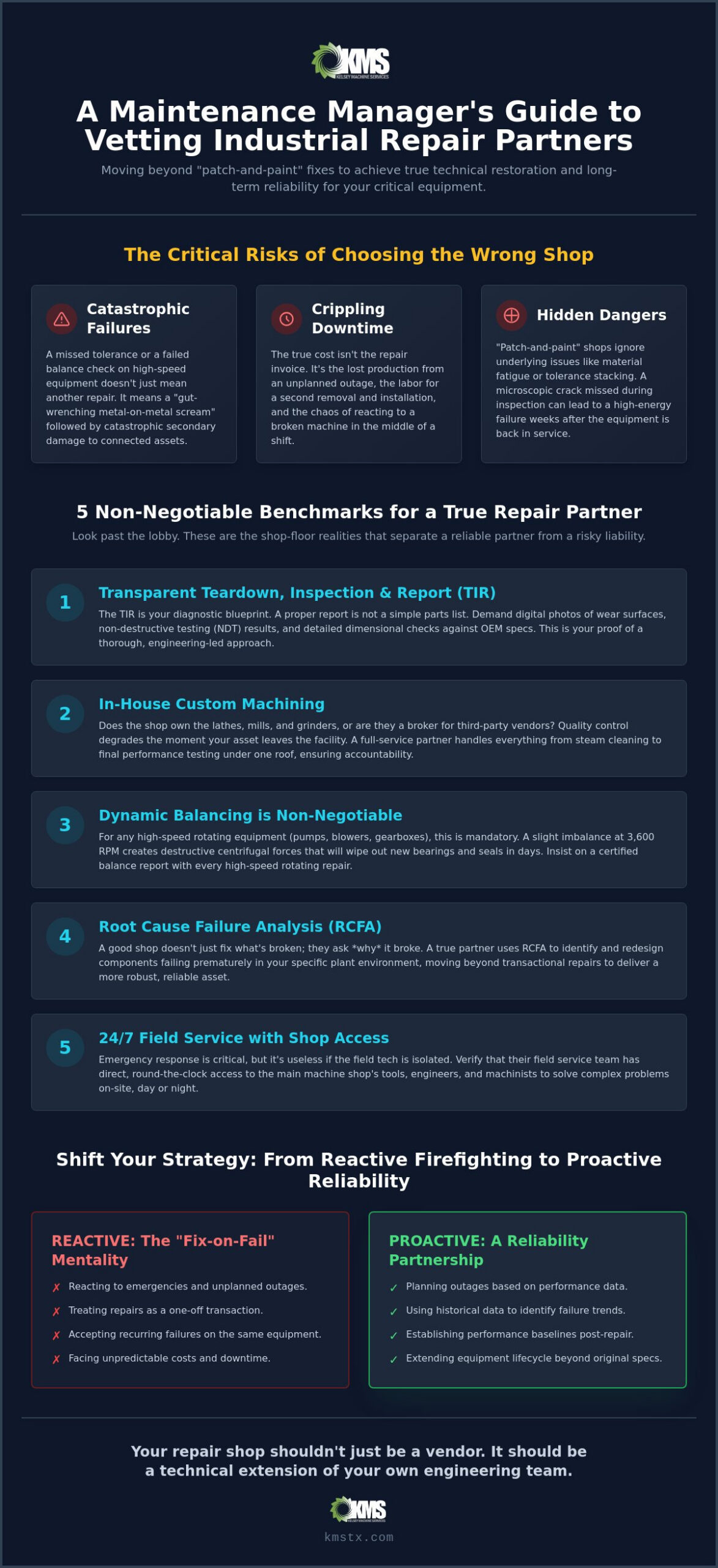
- Learn the essential shop-floor benchmarks for finding a reliable industrial repair partner, focusing on in-house custom machining capabilities and transparent Teardown, Inspection, and Report (TIR) documentation.
- Understand why dynamic balancing is a non-negotiable requirement for high-speed rotating equipment to prevent premature seal leaks and vibration-related failures.
- Evaluate a partner’s emergency response readiness by ensuring their field service technicians have direct, 24/7 access to the precision tools and expertise of the main machine shop.
- Move beyond transactional repairs by utilizing Root Cause Failure Analysis (RCFA) to identify and redesign components that are failing prematurely in your specific plant environment.
The Critical Risks of Selecting the Wrong Industrial Repair Partner
Finding a reliable industrial repair partner is about more than just checking a box on a procurement list. A true partner acts as a technical extension of your own maintenance team, prioritizing the long-term longevity of the asset over a quick, superficial fix. Many shops fall into the “patch-and-paint” trap. They clean the exterior and replace the most obvious worn parts, but they ignore the underlying mechanical issues that lead to catastrophic secondary failures in rotating equipment. When you are dealing with high-speed assets like gearboxes or blowers, these oversights are dangerous.
High-precision rotating assets require a level of expertise that goes beyond general mechanical work. A minor oversight during a pump repair can lead to a total plant shutdown within weeks. The true cost of choosing the wrong shop isn’t just the invoice; it’s the labor for a second removal, the lost production during an unplanned outage, and the very real risk of collateral damage to connected infrastructure. To better understand how to vet these services, watch this helpful video:
The Hidden Dangers of Improper Rotating Equipment Repair
High-speed rotating equipment is incredibly sensitive to minor deviations. A slight imbalance at 3,600 RPM creates centrifugal forces that can destroy a new set of bearings in a matter of days. This is why condition-based maintenance through vibration analysis is so critical during the testing phase. You also have to worry about tolerance stacking. If a shop uses aftermarket parts that don’t meet exact OEM clearance specifications, the cumulative error leads to heat buildup and eventual seizure. Beyond visible wear, a professional shop must utilize non-destructive testing to inspect for microscopic cracks caused by material fatigue. If you miss a crack in a centrifuge bowl, the result isn’t just a leak; it’s a catastrophic failure.
Moving from Reactive to Proactive Reliability
A reliable partner helps you shift from a “fix-on-fail” mentality to a proactive reliability strategy. This involves looking at historical repair data to identify recurring failure modes across your fleet. Instead of just performing a compressor repair and sending it back, a good shop establishes a performance baseline post-refurbishment. This data ensures the equipment is operating at peak efficiency and provides a reference point for future inspections. When you have this level of detail, you can plan outages around your schedule rather than reacting to a broken machine in the middle of the night.
Technical Benchmarks: How to Vet a Precision Machine Shop
Finding a reliable industrial repair partner requires looking past the lobby and onto the machine shop’s actual floor. You need to verify if the shop owns the specialized equipment required for your specific asset or if they act as a broker for third-party vendors. Quality control often degrades the moment your equipment leaves the primary facility. A full-service shop handles every phase from initial steam cleaning to final performance testing under one roof. This internal oversight ensures the technicians who performed the initial teardown are the same experts overseeing the final rebuild and testing phases.
The TIR Process: Transparency in the Shop
The Teardown, Inspection, and Report (TIR) is the most critical document in the repair cycle. It isn’t just a bill of materials; it’s a technical diagnostic. A professional package must include digital photography of all wear surfaces, non-destructive testing (NDT) results like dye penetrant or magnetic particle inspection, and detailed dimensional checks. A professional report should align with industry standards for equipment repair to ensure every tolerance and clearance is documented against OEM specs. When you review these documents, look for a root-cause failure analysis. A shop that simply says “the bearing failed” isn’t helping you prevent the next outage. Utilizing established rotating equipment maintenance frameworks helps you determine if a shop is providing a comprehensive solution or just a temporary patch.
Machining and Tooling Requirements
Heavy rotating equipment demands heavy-duty tooling. You should verify if the shop has large-swing lathes and CNC capabilities for custom component fabrication. If a pump or gearbox housing is washed out, does the shop have the vertical or horizontal boring mills necessary to restore it to original specifications? Many modern centrifuges and compressors utilize exotic alloys like Hastelloy or Duplex stainless steel. Working with these materials requires specific speeds, feeds, and tooling that general-purpose shops might not possess. Precision is measured in thousandths, so ensure their metrology tools are calibrated and documented regularly.
Accountability is the final technical benchmark. A 12-month operational warranty should be the standard for any major overhaul. If your facility requires this level of custom machining and technical rigor, vetting the shop’s tooling is your best defense against repeat failures. This level of transparency ensures that the rebuilt asset will meet or exceed its original design life.
The Role of Precision Machining and Dynamic Balancing
High-speed rotation changes the mechanical physics of your equipment. When you are finding a reliable industrial repair partner, you have to look beyond basic assembly skills and evaluate their mastery of vibration control. For assets like high-speed centrifuges and blowers, dynamic balancing is a non-negotiable requirement. A rotor that feels stable at low speeds can develop violent centrifugal forces once it reaches operational RPM. This is the fundamental difference between static and dynamic balance. Static balancing might stop a part from rolling to a heavy spot, but it won’t account for the “couple” unbalance that occurs when the equipment is at full load. Ignoring this leads to premature seal leaks and bearing housing wear long before the next scheduled outage.
To ensure long-term reliability, a shop should adhere to ISO 1940/1 standards. These G-grade balance specifications define the permissible residual unbalance for different types of machinery. Most heavy industrial rotors require a G2.5 rating, while high-precision turbomachinery may demand a G1.0. If a repair shop can’t provide a balance report showing these specific metrics, they are essentially guessing at your equipment’s stability.
Restoring Stability with Dynamic Balancing
Utilizing precision dynamic balancing services is the most effective way to extend the mean time between failures (MTBF) for your rotating assets. You can usually spot an imbalanced rotor by looking for localized heat buildup, excessive noise, or erratic vibration signatures on your sensors. The balancing process involves a methodical approach of adding or removing weight at specific angular positions to achieve operational stability. This precision work eliminates the internal stresses that otherwise fatigue the metal and destroy your precision-ground shafts.
Custom Fabrication for Obsolete Equipment
One of the hardest parts of maintaining a legacy plant is dealing with obsolescence. When an OEM tells you to buy a new machine because they no longer stock parts, a true repair partner offers a different path. Through custom machining and reverse engineering, a shop can use your worn components to create new, precise CAD drawings. This allows for the fabrication of one-off parts that meet or exceed the original material specs. By integrating high-quality industrial machine spare parts into the refurbishment workflow, you keep your legacy equipment operational without the massive capital expenditure of a full system replacement.
Field Service and Emergency Response Readiness
Industrial failures don’t happen on a schedule. They usually occur at 2:00 AM on a holiday weekend when your skeleton crew is stretched thin. When you are in the process of finding a reliable industrial repair partner, you have to look beyond their standard business hours. A partner must be ready for critical infrastructure failures at any time. This readiness goes beyond answering the phone; it requires a “Shop-to-Field” connection where the technician in your plant has the full technical backing of the machine shop. If a field tech discovers a damaged shaft sleeve during troubleshooting, they should be able to trigger a custom machining job immediately rather than waiting for the next business day.
On-site troubleshooting is an art that combines hydraulic, mechanical, and alignment expertise. Many issues can be diagnosed and fixed without removing the equipment from its base. This saves you the headache of logistics and the risk of damage during transport. By using specialized tools like laser alignment systems and vibration analyzers, a field team can pinpoint the root cause of a pump or compressor issue in hours. Rapid turnaround isn’t just about speed; it’s about having the right assets in place to reduce lead times from months to days.
Logistics of Emergency Machine Repair
What should you expect from an emergency machine repair team during a midnight call-out? First, they need the right rigging equipment. Safely handling a 10-ton rotor in a cramped plant environment requires more than just a crane; it requires experience and the right safety protocols. A reliable partner arrives with specialized field tools, including laser alignment systems to ensure the machine is set up for success from the start. They don’t just get it running. They ensure the installation meets the same precision standards as the shop repair.
Strategic Spare Parts Management
Lead times for OEM parts have become a major bottleneck in heavy industry. You should vet your partner’s inventory to see if they stock common bearings, seals, and gears for major brands like Flottweg or Falk. A partner with a robust industrial machine spare parts inventory can often cut weeks off a repair schedule. High-quality aftermarket parts also play a role here, providing a way to reduce costs without sacrificing reliability. We recommend working with your partner to develop a “critical spares” list. This proactive step ensures that when an outage occurs, the parts you need are already sitting on a shelf, ready for installation.
If you are facing an unplanned outage and need immediate technical support, contact our team to discuss our spare parts inventory and field service capabilities.
Building a Strategic Partnership for Long-Term Reliability
Finding a reliable industrial repair partner shouldn’t be a transactional experience where you simply drop off a pump and wait for an invoice. True reliability comes from a strategic relationship where the repair shop understands the specific stresses of your unique plant environment. Every facility has its own quirks, such as specific chemical exposures or structural vibration issues that the OEM might not have accounted for in the original design. A partner that knows your equipment history can perform Root Cause Failure Analysis (RCFA) to identify why components fail prematurely. Instead of just replacing a worn shaft, they might suggest a material upgrade or a design modification through custom machining to stop the cycle of repeat failures.
Training and knowledge transfer are often overlooked components of this partnership. A shop that is confident in its technical process won’t hide its methods. They should be willing to show your maintenance team the early warning signs of failure during the teardown and inspection phase. This level of collaboration helps your team catch minor issues before they escalate into a full emergency call-out. It’s about moving from a vendor-client relationship to a unified engineering front.
Collaboration in Engineering
Your repair history is a goldmine of empirical data. Over time, these records help you justify capital expenditures or equipment upgrades to plant management. If you have a recurring issue with a specific blower or gearbox, your partner can use their machining capabilities to improve upon original OEM designs for your specific harsh environment. Establishing clear communication channels between your maintenance leads and the shop foreman ensures that technical nuances aren’t lost in a pile of paperwork. This direct line of communication is vital when you’re making real-time decisions during a critical overhaul.
The Reliability Roadmap
To keep the partnership accountable, you need to set clear Key Performance Indicators (KPIs). Track metrics like Mean Time Between Failures (MTBF), repair turnaround times, and warranty claim rates. A partner that understands the technical nuances of industrial centrifuge repair across multiple sectors will bring a broader perspective to your specific challenges. They have likely seen your specific failure mode in another industry and already have a documented solution ready to implement.
Technical expertise and shop-floor grit are the true markers of a reliable partner. You want a shop that isn’t afraid to get dirty during a complex teardown but possesses the precision to hit a micrometer-level tolerance during the final rebuild. When you find that balance, your equipment will consistently run longer and more efficiently than it did when it first arrived on your site.
Securing the Future of Your Rotating Assets
Restoring heavy equipment to OEM standards requires a level of technical rigor that goes beyond simple parts replacement. We’ve covered how the process of finding a reliable industrial repair partner centers on verifying in-house precision machining capabilities and a commitment to dynamic balancing. By focusing on transparent documentation through the TIR process and prioritizing root-cause failure analysis, you can shift your maintenance strategy from reactive repairs to long-term reliability. A shop that offers 24/7 emergency field service response ensures that your critical infrastructure is protected even during unplanned midnight failures.
With over four decades of industrial mechanical expertise, our team provides the full-service precision machine shop and dynamic balancing support needed to extend the lifecycle of your most critical assets. We understand the high stakes of downtime and the specific precision required to keep your plant running efficiently. If you’re ready to move beyond the “patch-and-paint” cycle, consult with our expert engineers for your next industrial repair project. Let’s work together to make your equipment more reliable than it was the day it was first commissioned.
Frequently Asked Questions
What certifications should a reliable industrial repair partner hold?
ISO 9001:2015 is the baseline for quality management, while API Specification Q1, 10th Edition is the current standard for the petroleum and natural gas industry. These certifications show a partner follows a process-driven approach to repair. You should also check for compliance with OSHA safety standards and EPA regulations regarding industrial coatings to ensure they meet modern legal requirements.
How long does a typical industrial gearbox refurbishment take?
A standard refurbishment usually takes between 14 and 30 days, though this depends entirely on the extent of the internal damage. If custom gears or shafts need to be fabricated, the timeline might extend. When finding a reliable industrial repair partner, ask about their current shop load and spare parts inventory to get a realistic delivery date before you ship the unit.
What is the difference between an OEM repair and a third-party precision shop?
OEM repairs strictly follow factory part replacement, which can lead to long lead times for older models. A third-party precision shop uses reverse engineering to restore components to original specs or better. This approach is often more cost-effective and faster, especially when the original manufacturer has discontinued support for your specific model or when parts are on backorder.
How does dynamic balancing improve the lifespan of a centrifuge?
Dynamic balancing removes the residual unbalance that causes excessive vibration and heat during high-speed operation. For centrifuges, even a few grams of unbalance can lead to catastrophic bearing failure. By achieving G-grade balance specs, you stop the vibration before it destroys your seals and housing, which significantly extends the machine’s operational life between overhauls.
Can a repair partner help with equipment that is no longer supported by the manufacturer?
A qualified shop can keep legacy equipment running indefinitely through custom fabrication and reverse engineering. They use the old, worn components as a template to create new CAD drawings and machine replacement parts from scratch. This prevents you from having to replace an entire system just because the OEM no longer stocks a specific seal, gear, or shaft.
What should be included in a technical inspection report (TIR)?
A professional TIR must include high-resolution digital photography of all wear surfaces and non-destructive testing (NDT) findings. It should also list micrometer-level dimensional checks compared against OEM tolerances. Most importantly, it needs a root-cause analysis that explains why the failure happened so your team can make operational changes to prevent it from recurring.
Is on-site repair always better than shop repair for large equipment?
Field service is ideal for troubleshooting and laser alignment, but shop repair is necessary for major overhauls. A shop offers a clean, controlled environment with heavy-duty boring mills and balancing stands that can’t be brought to your plant. For a full restoration, pulling the equipment and sending it to a full-service facility is usually the safer bet for quality control.
How do I vet the machining capabilities of a potential repair partner?
Ask for a shop tour to see their large-swing lathes and horizontal boring mills in person. You want to see that they have the physical capacity to handle your largest rotors and housings without outsourcing the work. Inquire about their metrology program and how often they calibrate their precision measuring tools to ensure they can hit the tight tolerances your equipment requires.