Why do your vibration sensors keep flagging a critical alert when the bearing housing feels cool to the touch and the oil analysis looks clean? Digital monitoring is excellent for catching symptoms, but it rarely explains the underlying mechanical root cause. You’ve likely felt the frustration of an unplanned outage during peak demand, watching costs climb while you struggle to find a shop capable of holding the massive industrial tolerances your turbines or gearboxes require.
We understand that true reliability isn’t won on a dashboard. It’s won on the shop floor through precision restoration. This article provides a clear framework for power generation machinery maintenance, helping you master the mechanical inspection points and restoration strategies required to keep rotating assets running at peak efficiency. You’ll learn how to distinguish between a component that needs a simple patch and one that requires a full refurbishment. We’ll also explore how precision dynamic balancing and custom machining can significantly improve your asset lifecycle, ensuring your equipment stays online when the grid needs it most.
Key Takeaways
- Effective power generation machinery maintenance is about more than just fixing what’s broken; it’s a strategic approach to eliminating mechanical risk and protecting your plant’s revenue.
- Learn how to identify subtle mechanical failure points in heavy gearboxes and centrifuge systems before they trigger a costly forced outage.
- Discover why moving away from a “run-to-failure” mindset toward a preventive overhaul schedule is the most effective way to stabilize your maintenance budget.
- Gain a clear understanding of the professional restoration process, including the importance of non-destructive testing for uncovering hidden fatigue.
- Identify the key criteria for selecting a repair partner that can handle massive industrial tolerances and provide the rapid response needed during emergencies.
What is Power Generation Machinery Maintenance?
In any power plant, the equation is simple: availability equals revenue. When we talk about power generation machinery maintenance, we’re talking about the systematic elimination of mechanical risk to ensure that every rotating asset performs exactly as engineered. While digital dashboards provide a high-level view of health, they’re often just reporting the aftermath of a mechanical failure. True reliability starts with the physical condition of the metal itself. If the foundation of your equipment is compromised by wear or misalignment, even the most advanced sensors won’t save you from a forced outage.
The Role of Rotating Equipment in Power Plants
Critical infrastructure depends on a complex web of auxiliary equipment that often works harder than the primary driver. While the turbine gets the glory, the supporting cast of gearboxes, pumps, compressors, and centrifuges keeps the plant operational. There’s a direct correlation between the mechanical health of these rotating assets and the overall plant capacity factor. If a lube oil pump fails or a cooling water compressor trips, the entire system often goes down with it. These auxiliary failures are a leading cause of total system trips, turning a minor mechanical oversight into a multi-million dollar revenue loss.
Defining the ‘Mechanical-First’ Approach
We need to move beyond simply reacting to digital alerts. A mechanical-first approach focuses on physical tolerance verification, checking backlash, verifying bearing clearances, and ensuring every component aligns with original OEM specifications. This level of precision is what separates a simple patch job from a technical restoration. By prioritizing physical integrity, you can move between different maintenance strategies with confidence, knowing the foundation of your plant is solid. Power generation maintenance is the discipline of maintaining mechanical tolerances to prevent catastrophic failure. It requires a deep understanding of how massive industrial components interact under load, ensuring that every repair facilitates long-term stability rather than a temporary fix.
The Critical Rotating Equipment Maintenance Checklist
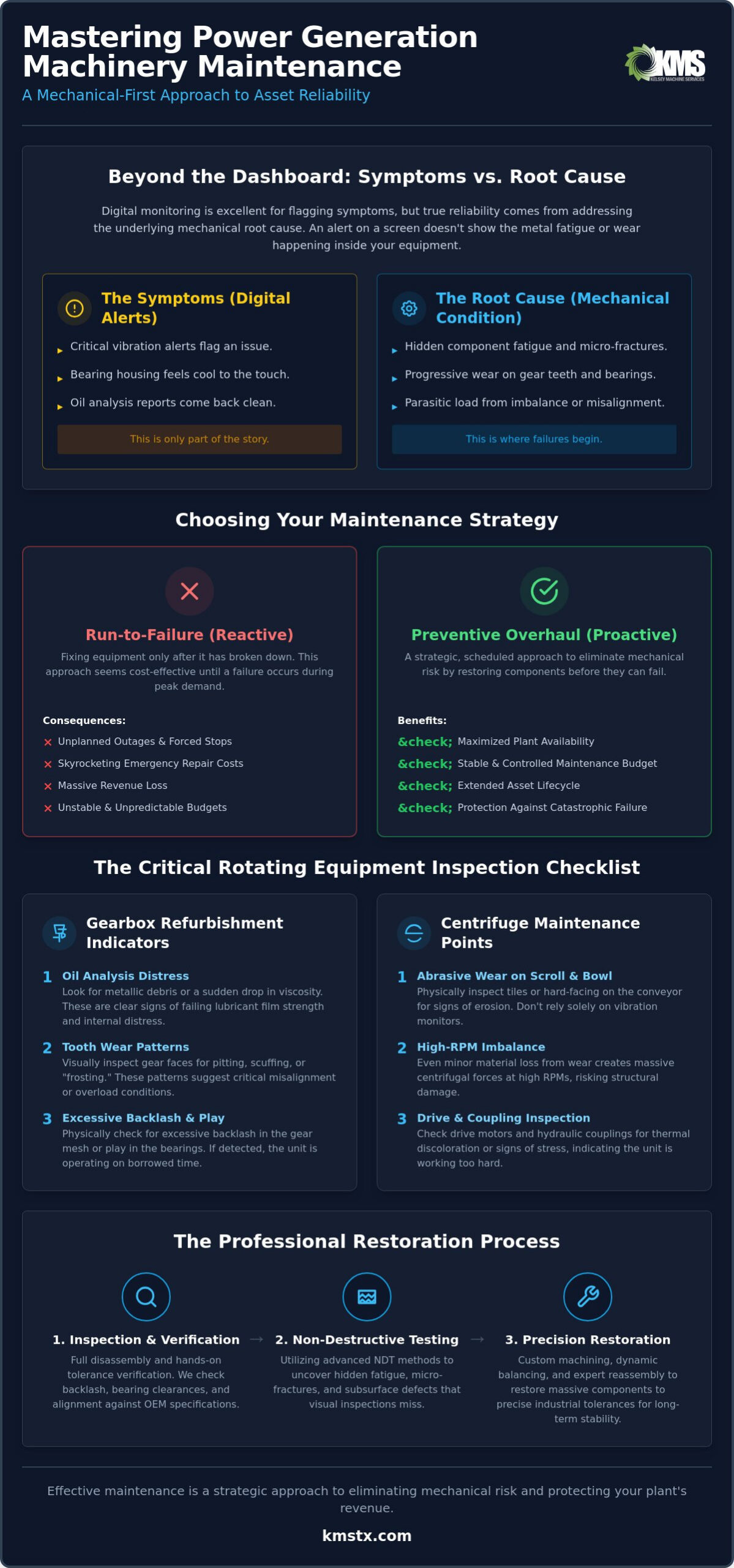
Software is a valuable tool, but it can’t replace the insight gained from a hands-on mechanical inspection. When managing power generation machinery maintenance, your team needs a checklist that addresses the gritty realities of metal-on-metal contact. It’s about looking past the dashboard and verifying the physical integrity of every rotating component in the chain.
Gearbox Refurbishment Indicators
Oil analysis serves as the primary diagnostic tool for identifying internal distress. Look for metallic debris or a sudden drop in viscosity. These are clear indicators that the lubricant film strength is failing. During a visual inspection, focus on the tooth wear patterns. Pitting, scuffing, or “frosting” on the gear faces suggests misalignment or overload conditions. Check the gear teeth. If you detect excessive backlash or bearing play, the unit is already on borrowed time. Reliable power generation machinery maintenance depends on catching these gear mesh issues before they lead to a catastrophic failure. While field lubrication helps, a full shop refurbishment is often necessary to restore the precise tolerances required by preventive maintenance strategies developed for high-availability plants.
Centrifuge and Separator Maintenance Points
Centrifuges are the workhorses of fluid processing, but abrasive wear on the scroll and bowl can quickly throw a unit out of balance. Don’t just watch the vibration monitor. Physically inspect the tiles or hard-facing on the conveyor for signs of erosion. Even minor material loss at high RPMs creates massive centrifugal forces. These forces can lead to structural damage to the plant floor if left unchecked. A solid maintenance routine includes checking the drive motors and hydraulic couplings for thermal discoloration or leaks. If the vibration signatures start creeping up, a professional centrifuge repair specialist can perform the necessary dynamic balancing to keep the unit stable.
Auxiliary Rotating Assets: Pumps and Blowers
Pumps and compressors often fly under the radar until they trip a critical system. Mechanical seals are the most frequent failure point. Look for weeping or crystallization around the gland. Shaft alignment is equally critical. Even a few thousandths of an inch of misalignment increases parasitic power loss and puts undue stress on the bearings. For blowers and fans, dynamic balancing of the impellers or blades is the only way to ensure long-term stability. If you’re seeing pressure inconsistency or fluid contamination in your hydraulic drives, it’s a sign that the internal seals or valves are failing. Catching these issues early prevents a minor leak from becoming a forced outage.
Predictive vs. Preventive: Choosing Your Maintenance Strategy
Adopting a “run-to-failure” mindset in critical power infrastructure is a gamble where the house eventually wins. When a primary gearbox or a high-speed centrifuge fails unexpectedly, the costs extend far beyond the repair invoice; you’re looking at lost generation revenue and potential grid penalties. Effective power generation machinery maintenance requires a clear distinction between catching a problem early and preventing it from ever occurring. While predictive tools like vibration sensors are invaluable, they shouldn’t be your only line of defense. A preventive strategy creates a predictable budget for plant managers by scheduling work during low-demand periods rather than reacting to a crisis during a heatwave or a winter storm.
The Risks of Over-Reliance on Digital Sensors
Implementing a Hybrid Reliability Strategy
The Step-by-Step Mechanical Overhaul Process
The real work of power generation machinery maintenance happens when the machine is on the shop floor and the bolts are out. A professional overhaul isn’t just a “clean and check” routine; it’s a methodical deconstruction designed to uncover every hidden defect that digital sensors might have overlooked. We start with a full teardown and cleaning. This process involves removing decades of grease, scale, and carbon buildup to reveal the base metal. You can’t inspect what you can’t see, and getting the component back to its raw state is the only way to perform accurate Non-Destructive Testing (NDT).
Teardown and Root Cause Analysis
A successful overhaul requires documenting failure modes before the first part hits the cleaning tank. We look at wear patterns on gear teeth and bearing races to determine if the root cause was a lack of lubrication, operational misuse, or a chronic misalignment. This analysis is vital for preventing repeat failures. For sensitive rotating components, this work should happen in a controlled environment to prevent particulate contamination from compromising new seals or bearings during the reassembly process. Identifying these patterns early ensures the repair addresses the source of the problem, not just the symptom.
Precision Restoration and Dynamic Balancing
The final and most critical step in the restoration process is dynamic balancing. Even the most precisely machined rotor will fail prematurely if it’s not balanced for its specific operating RPM. The science behind this is straightforward: reducing the G-load on your bearings leads to an exponential increase in their service life. We use specialized equipment to ensure vibration-free operation, which is essential for high-speed assets like centrifuges and blowers. If you want to see how we handle these massive tolerances, read more about our dynamic balancing services Houston.
Precision restoration is the only way to guarantee that your equipment returns to service in better-than-new condition. If your critical assets are showing signs of age or increased vibration, our team provides the expert custom machining and technical restoration needed to secure your plant’s reliability.
Partnering for Reliability: Selecting a Repair Solution
Choosing the right shop for your power generation machinery maintenance isn’t just about finding the lowest bid; it’s about finding a partner that can actually handle the physical scale of your equipment. Many local shops claim they can fix a gearbox, but they often lack the heavy-lift cranes or the massive lathe capacity required for a 30,000-pound unit. You need to verify that a facility has the floor space and the specialized tooling to maintain the tight industrial tolerances your turbines and drives require. If a shop can’t measure your components accurately, they certainly can’t fix them properly.
Time is the most expensive variable during a forced outage. A shop that offers 24/7 emergency support is essential for minimizing downtime when the grid is under pressure and every hour of lost generation counts. This responsiveness must be backed by an extensive spare parts inventory. Waiting six weeks for a custom bearing or a specific seal kit can turn a minor repair into a financial disaster for a plant manager. A reliable partner should also provide a comprehensive technical report with every job, including:
- Detailed “as-found” and “as-left” measurements.
- Non-destructive testing (NDT) results and metallurgical analysis.
- Dynamic balancing certificates for all rotating assemblies.
- A clear warranty that gives you confidence when the asset goes back online.
What to Look for in a Technical Restoration Partner
Look for a team with proven experience across specific industry workhorses like Falk and Lufkin gearboxes or Flottweg centrifuges. These machines have unique engineering quirks that only decades of hands-on work can reveal. It’s also vital that your partner offers on-site field service for rapid troubleshooting. Sometimes you need a veteran technician on your plant floor to diagnose a vibration issue before the equipment is even pulled for repair. The goal should always be an “OEM-plus” standard, where the restored component actually performs better than the day it was first installed due to modern precision machining techniques.
Securing Your Facility’s Future
Building a long-term relationship with a shop that understands your specific plant layout and equipment history pays dividends during an emergency. When the repair team knows exactly where your pumps and centrifuges sit, they can move faster and more accurately. There’s a significant benefit to using a “one-stop” shop that can handle everything from gearbox repair to complex dynamic balancing. This eliminates the headache of managing multiple vendors and ensures a consistent standard of quality across your entire rotating assembly. If you’re operating in high-stakes environments, having a plan for emergency machine repair Gulf Coast protocols is the final piece of the reliability puzzle. By selecting a partner with the right capacity and technical depth, you ensure your power generation machinery maintenance program is built for the long haul.
Securing Your Plant’s Mechanical Foundation
We’ve explored why true reliability is built on precise tolerances and methodical shop-floor inspections rather than just digital alerts. By moving beyond sensor data and prioritizing technical restoration, you protect your facility from the massive costs of unplanned downtime during peak demand. Effective power generation machinery maintenance isn’t just a line item; it’s a strategic investment in your plant’s long-term capacity and revenue.
Don’t wait for a vibration alert to turn into a total system trip. With 40+ years of industrial expertise and 24/7 emergency field service, our team is ready to provide the warranted mechanical restoration your heavy rotating assets deserve. Whether you’re dealing with a failing gearbox or a critical centrifuge, we have the capacity to handle the weight and the precision to restore original OEM standards.
Get a quote for your power generation machinery repair at kmstx.com and take the first step toward a more reliable, vibration-free operation. Your equipment is the backbone of the grid; let’s make sure it stays that way.
Frequently Asked Questions
What are the most common mechanical causes of power plant downtime?
Misalignment, bearing fatigue, and lubrication failure are the primary mechanical drivers of unplanned downtime. When shafts aren’t perfectly aligned, they create parasitic loads that accelerate seal wear and cause thermal expansion issues. These failures often start as minor vibration spikes that, if ignored, lead to catastrophic trips. Catching these early through methodical power generation machinery maintenance is the only way to avoid the high cost of a forced outage during peak load.
How often should heavy rotating machinery undergo a full mechanical teardown?
Most heavy rotating machinery should undergo a full mechanical teardown every 3 to 5 years, depending on the asset’s specific duty cycle and environment. While sensors provide real-time data, they can’t detect internal metallurgical fatigue or housing erosion. A scheduled teardown allows your team to verify material thickness and restore tolerances before a failure occurs. This proactive approach is essential for maintaining high availability in critical power infrastructure.
Can dynamic balancing be performed on-site at a power generation facility?
Dynamic balancing can be performed on-site for minor corrections, but high-RPM assets usually require a specialized shop environment. Field balancing is great for quick fixes, but it lacks the precision of a dedicated balancing stand that can simulate full operating speeds. For critical centrifuges or blowers, shop-based balancing ensures the rotor is perfectly true, which significantly extends the life of your bearings and seals by reducing centrifugal forces.
What is the difference between refurbishment and simple repair for industrial gearboxes?
A simple repair addresses a specific failed component, while a refurbishment restores the entire unit to OEM-plus standards. In an industrial gearbox refurbishment, every bearing is replaced, housings are checked for line-bore accuracy, and gear teeth undergo non-destructive testing. This process ensures the entire assembly is reliable, not just the part that broke. It’s the difference between a temporary patch and a long-term reliability solution for your plant.
How do I know if my centrifuge requires a full shop restoration?
Your centrifuge likely needs a full shop restoration if field balancing fails to reduce vibration levels or if you notice a significant drop in processing efficiency. Abrasive wear on the scroll or bowl can create internal imbalances that are impossible to fix on-site. If you’re seeing metallic debris in the oil or hearing unusual housing noise, it’s time to pull the unit for a professional inspection before the damage spreads to the drive system.
What documentation should I expect after a major mechanical overhaul?
You should expect a comprehensive technical report including as-found and as-left measurements, NDT results, and dynamic balancing certificates. This documentation provides a clear baseline for your asset’s health and is vital for future reliability tracking. A professional shop will also include a detailed root cause analysis. This helps your team understand why the failure happened so you can prevent it from recurring during your next cycle of power generation machinery maintenance.
Is it possible to repair power generation equipment that is no longer supported by the OEM?
It’s absolutely possible to repair legacy equipment using custom machining and reverse engineering. Many power plants rely on assets that are decades old and no longer supported by the original manufacturer. A shop with technical restoration expertise can fabricate replacement gears, shafts, and housings that often exceed the original material specifications. This allows you to extend the life of your existing infrastructure without the massive cost and lead time of a full replacement.
How does precision machining improve the heat rate of a power plant?
Precision machining improves the heat rate of a power plant by reducing parasitic energy losses caused by internal friction and misalignment. When rotating components are restored to exact tolerances, the system requires less fuel to overcome mechanical resistance and achieve the desired output. This efficiency gain might seem small on a single pump, but across an entire facility, it leads to a measurable improvement in overall plant performance and lower operational costs.